
Challenges
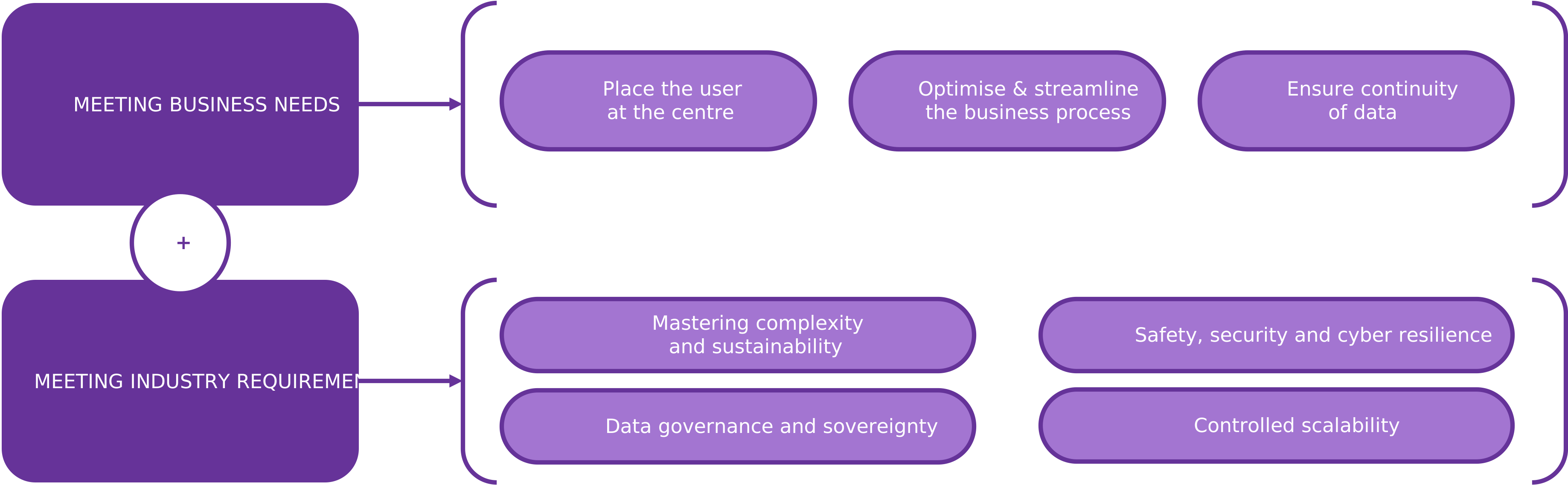
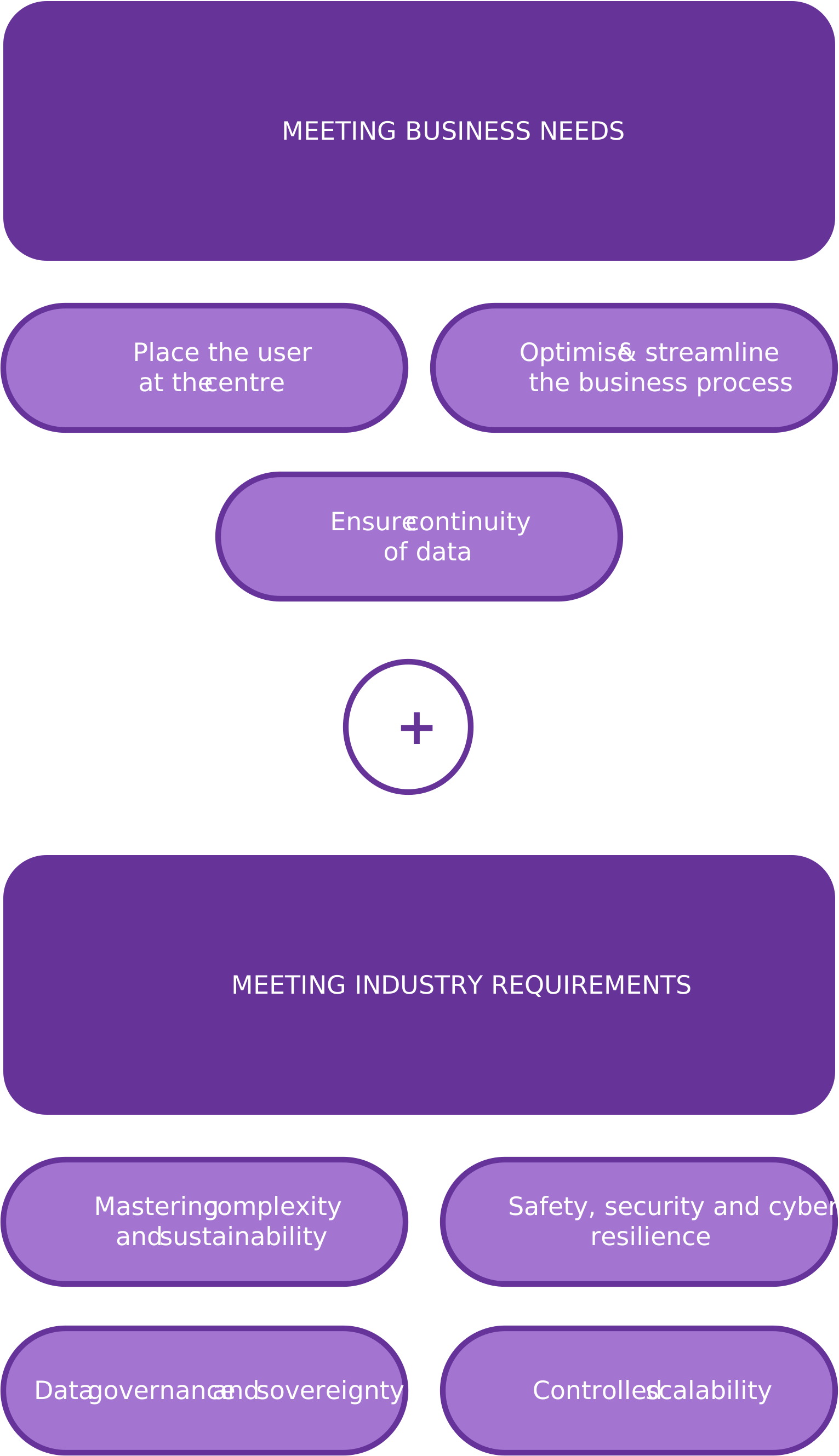
For complex systems such as nuclear and defence, the urbanisation and design of information systems (IS) have become strategic issues, just like the physical infrastructure itself. The challenge of IS urbanisation is tomeet business needs while addressing the requirements of energy and defence.
Enjeux
For complex systems such as nuclear and defence, the urbanisation and design of information systems (IS) have become strategic issues, just like the physical infrastructure itself. The challenge of IS urbanisation is tomeet business needs while addressing the requirements of energy and defence.
-
 UNDERSTANDING THE BUSINESS SYSTEM AND STRATEGIC ISSUES
Defining the scope of missions, organisation, regulatory constraints, safety, security and sovereignty issues, etc. -
 MAPPING OF THE EXISTING SITUATION
Mapping of applications, data, flows, infrastructure, security zones, dependencies, etc. -
 DEFINITION OF URBANISATION PRINCIPLES
Decoupling between domains, IT/OT separation, common reference frameworks, security by design, sovereignty of critical components, data traceability, etc. -
 DIVISION INTO DOMAINS AND ZONES
Structure the target logical architecture by dividing functional domains, security zones, layers, etc. -
 DEFINITION OF THE TARGET ARCHITECTURE
Structure the IS into large coherent blocks, define the roles of the building blocks, the modes of communication and interaction, and the non-negotiable rules.
-
EXPRESSION OF NEEDS AND REQUIREMENTS
Business needs, regulatory, safety, security and availability requirements, for integration into the existing information system -
FUNCTIONAL ANALYSIS
Functional specification of processes and software requirements, assistance with selecting integrators, functional acceptance testing, etc. -
FUNCTIONAL AND APPLICATION ARCHITECTURE
Definition of internal components, their interactions, data flow interfaces, etc. -
TECHNICAL ARCHITECTURE
Choice of technologies, hosting, networks, security, monitoring and backup systems, etc. -
DATA DESIGN
Design of the IS backbone: data models, repositories, quality rules, traceability, information lifecycle, etc. -
 SECURITY AND SAFETY BY DESIGN
Identity and access management, encryption, network partitioning, etc. -
 VALIDATION, QUALIFICATION AND INTEGRATION
Functional testing, load testing, security testing, urbanisation compliance verification